A Warming World in a Cold Place
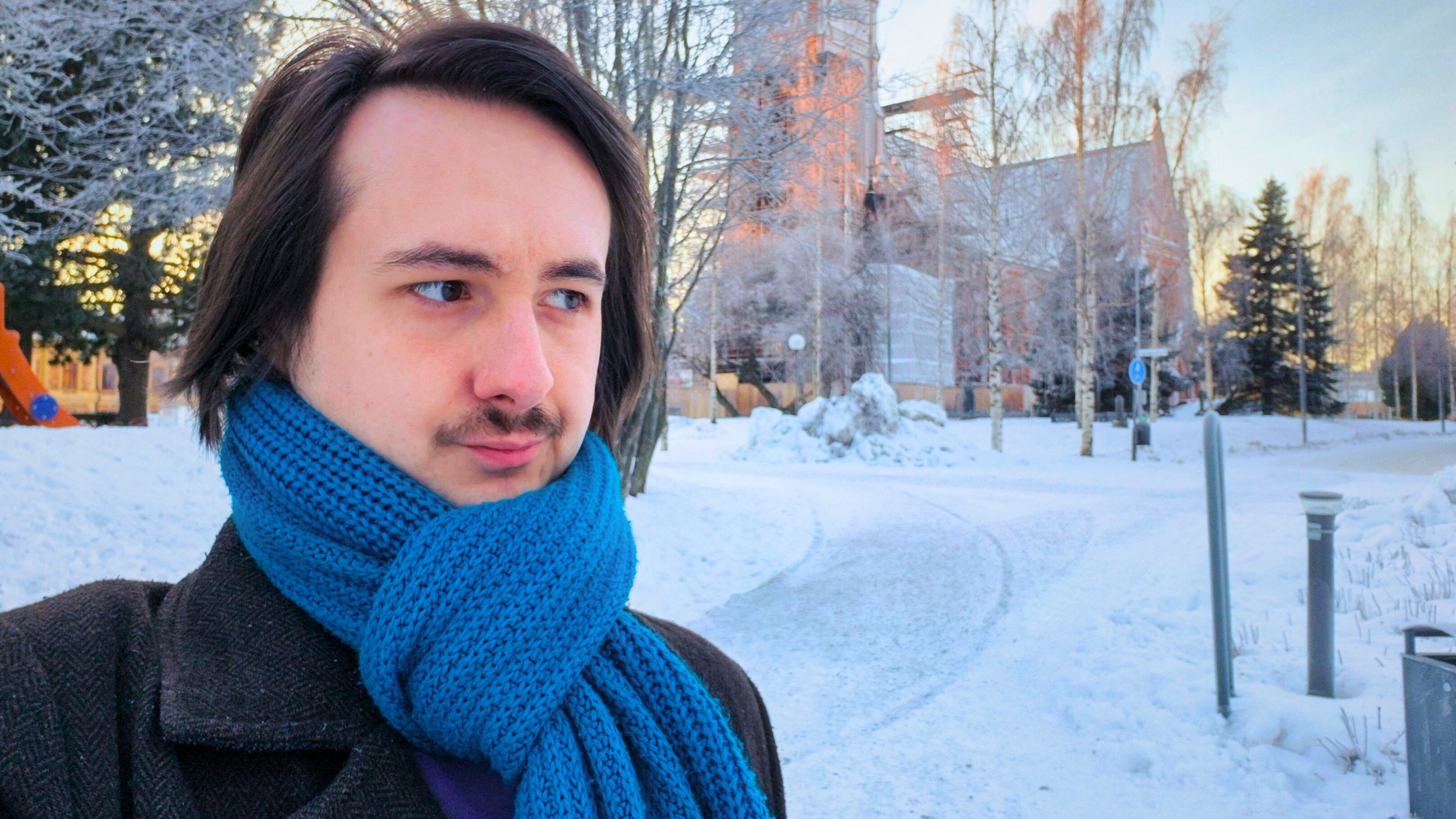
DDL Smith in Luleå.
Welcome to Luleå! Currently a comfortable -13 °C with clear skies, and the sun playing peekaboo with the horizon. When booking flights a week ago, Luleå saw an Arctic blast with temperatures plummeting to -28°C; far lower than the seasonal average. I packed accordingly. I arrived with bags stuffed for an Arctic desert: ski gloves, thermals, and more sweaters than I’ll wear on this trip. Amidst rushing around to buy warmer clothes, it’s easy to forget we’re in the middle of a climate catastrophe. Yet the words "Global Warming" feel laughable here.
But here lies the disconnect: my personal journey expecting sub-Arctic temperatures only to find milder weather. The immediate climate I experience frames my perception, and similarly, public messaging should aim to bridge the gap between personal experiences and broader climate patterns.
It can be hard to imagine a warming crisis when the sub-zero temperatures you're experiencing are freezing your morning coffee. Growing up, I recall seeing the term' global warming' everywhere. Now we use the more appropriate term, Climate Change. As an author with a background in copywriting, I find the way we use words and how specific phrases stick fascinating. Where did the phrase Global Warming come from? It's logically correct, yet it feels wrong.
The Branding Problem
I remember growing up reading headlines about global warming and being taught about its effects in school. The sudden change in the media to Climate change felt to me, like it felt to most, as a rebrand to gain attention to the crisis. Yet the research shows that was never the case.
Both terms have been used in the scientific community for a long time. The first known use of the term Global Warming is a 1975 scientific article by Wallace Broecker of Columbia University titled “Climate Change: Are we on the brink of a Pronounced Global Warming?” The term became commonplace in 1988 when NASA scientist James E. Hansen used the term in the US Congress to testify about the climate. The press has since used the terms interchangeably, as if they have the same meaning.
The mid-2000s saw a rise in the popularity of the wrong phrase, just as I remembered. As an example, TIME magazine’s April 9, 2007, issue featured the headline “The Global Warming Survival Guide”.
While the terms “Climate Change” and “Global Warming” were used interchangeably, the press preferred the latter. A ‘Change’ feels insignificant; our lives are constantly changing. A Global warming event… that depicts death by fire and brimstone; far more dramatic.
‘Warming’ Misleads Us
Global warming is technically correct; the average temperature globally is… warming. Yet, unless you live in an already sweltering desert, a generalised term doesn’t match what people feel in their immediate environment.
In cold countries, statements such as “the earth is warming up” feel absurd. Somebody might even welcome the thought of the earth warming up a bit while you’re shovelling snow from your driveway. However, the dangerous effects of a changing climate aren’t conveyed when we simply say “Warming”. No one in Luleå is expecting to put on suncream to walk to the shops any time soon.
The 20-degree difference within a couple of weeks speaks volumes about the rapid change in the climate. Weather doesn't necessarily equal climate, and recognising this difference is crucial for effective communication. Public perception won’t always separate them if we link them together in the words we write.
How framing shaped a generation
For many, the phrase Global Warming was all we heard growing up. It was the entire story to us. On our school worksheets, headlines of newspapers. Images of penguins on melting ice caps. Greenhouse gases are turning everywhere into scorched earth before we hit retirement. This incorrect hook shaped our early understanding of what was really going on in the climate. How could the world be warming when weather snaps from the Arctic bring more snow in the winter? How could the Earth be warming if we’re seeing more flash floods, not just heatwaves? What we witnessed didn’t match the narrative we’re taught. If we didn’t feel hotter, the crisis felt distant.
When the story centres on warming alone, it quietly implies a straight path towards a disaster. A steady climb toward an uninhabitable end state of the likes of Venus at a sweltering 450°C. The issue with pushing narratives about “warming” into mainstream media is that it sets a generation up with the wrong expectations.
People don’t like being told their lived experience is wrong. It’s human nature. So when messaging oversimplifies a complex issue, the public feels talked down to. That resentment can spill outward. We’ve seen this with protests that block roads and disrupt commuters: the intention may be noble, but, in practice, thousands of idling engines and angry drivers only deepen the divide. The crisis becomes background noise; the annoyance becomes the headline.
The gap between confusion and irritation gives misinformation a space to thrive.

Words Matter
The return to “Climate change” didn’t happen abruptly within the scientific community; it was always present. Yet, it felt abrupt within public perception. It’s a reminder that language is essential when we’re describing or relaying important information. The right words make complex ideas understandable. In the subject of climate change, it’s important to remember the bigger picture.
Sudden thaws in northern countries and wildfires in Australia aren’t contradictions. They’re symptoms of the same system behaving unpredictably. Climate change: not simply globe warming.
This is why words matter. The sudden change of perspective, although in the right direction, wasn’t about rebranding a crisis. It became a communication correction. We’re now communicating more honestly, which builds trust and underscores the importance of finally working on ways to mitigate disasters.
A Better Story
So as I’m sitting here in Luleå watching my coffee ice over with a suitcase of thermals I thought would be more useful, I’m reminded how there’s always a better way to communicate the crisis we face. We should strive to avoid sensationalism and misleading terms. Stay away from fueling scepticism with exaggerations. We can choose the language to use and inform people correctly. Not to confuse. By being deliberate in word selection, we can engage and educate more effectively.
When the framing of a situation improves, whether the importance is saving the world or selling some new socks, the conversation around us changes, too. As writers, leaders and communicators, our influence sits in clarity. In helping people make sense of a changing world.
I often think about how other planets tell their stories of their climate changing. Earth’s story currently is one of instability. Venus tells a different story, one in which feedback loops outran corrections. The lesson from other planets is perspective: climates don’t fail suddenly. By examining these planetary narratives, we see the importance of communicating the challenges that lie ahead.
Our words guide how people perceive that drift. If we get our words right, we help people to take the correct steps forward. That’s a far more hopeful story to tell.